

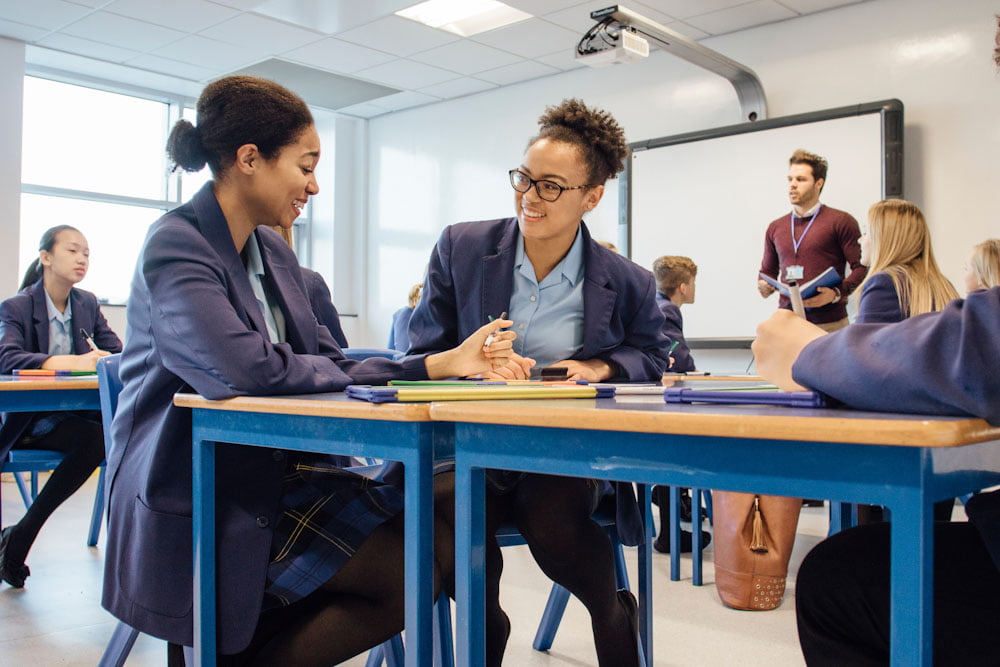
Discover the impact of peer teaching in language learning. Uncover insights on the benefits and barriers for this innovative approach in this article.
Table of Contents
- What is PEER TEACHING? What are some examples?
- Benefit 1: PEER TEACHING promotes active, diverse and deep learning.
- Benefit 2: PEER TEACHING facilitates the development of cognitive, affective and social skills.
- Benefit 3: PEER TEACHING builds peer relationships.
- Benefit 4: PEER TEACHING increases students’ motivation to learn.
- Benefit 5: PEER TEACHING enables students to be more receptive of the content and process.
- Benefit 6: PEER TEACHING improves communication and presentation skills.
- Benefit 7: PEER TEACHING creates a more personalised learning experience.
- Benefit 8: PEER TEACHING develops in students empathy with the teacher.
- Benefit 9: PEER TEACHING models interdependent learning experiences in out-of-classroom contexts.
- Barrier 1: PEER TEACHING may result in inaccurate content and skills been learned.
- Barrier 2: PEER TEACHING is only more effective when implemented at the right junctures.
- Barrier 3: PEER TEACHING is contingent on class dynamics.
- Barrier 4: PEER TEACHING is highly dependent on the personality of the students.
- Barrier 5: PEER TEACHING can be ineffective if the peer teachers are appointed against their will.
- Can PEER TEACHING be a revolutionary approach to language learning?
- Recommended Readings
- References
Have you ever given advice to someone and found that it ended up being just as helpful to you as it was to them? Turns out, the act of giving advice can provide a measurable benefit to the giver, as well as the receiver. Yes, something just like PEER TEACHING.
In an episode of the podcast “Choiceology” as hosted by Katy Milkman (a Professor at The Wharton School of the University of Pennsylvania who specialises in behavioural economics), we heard from Mike Mangini, a talented drummer who developed a system to codify his approach to playing drums while teaching privately and at the Berklee College of Music. This system enabled him to ace an audition for one of the biggest progressive rock bands in the world.
It’s not only in the field of music where offering advice is beneficial. It can also have practical applications in our everyday lives. In the same episode, we heard from several people offering advice on various challenges and realising the usefulness of their own advice in real-time.
In this article, we’ll be exploring several benefits of PEER TEACHING, with a focus on language learning. From improved learning outcomes to increased motivation, peer teaching has a lot to offer. But there are also some potential barriers to consider if you do want to implement this in your classrooms.
So, buckle up and get ready to buddy up for learning success, because we’re about to navigate through the evaluation of PEER TEACHING in language learning.
What is PEER TEACHING? What are some examples?

PEER TEACHING, also known as PEER TUTORING, is an instructional approach in which students learn from one another. Students take on the role of teachers to facilitate learning within their group or classroom. Depending on design, students can play both the roles of the teacher and learner or just restricted to either.
PEER TEACHING can take many forms. Learners can assume the role of the teacher for a specified period in class, which may be an entire lesson or just a specific activity. During this time, they can introduce new topics to their peers, facilitate discussions, provide assistance with learning tasks, and more.
PEER TEACHING can also happen over an extended period, where the peer teacher assumes the role over a term, semester or even a year. Usually for such arrangements, the peer teacher has a designated group of peer learners to be taken care of. It’s like having your own personal coach, but instead of paying big bucks, you learn from your peer(s) for free.
If we focus on the stability of roles, PEER TEACHING can be framed on 2 types of interaction dimensions (Hanke, 2012). The first type involves a horizontal interaction (“switched-role model”), where learners take on the role of the teacher for a particular task or activity while retaining their role as a student in other respects. The second approach, called the vertical interaction model, involves an older student taking on the role of a tutor and remaining in that position for the entire interaction.
PEER TEACHING is not exactly a new concept. In fact, it’s been around for centuries and is suggested to be traceable back to the ancient greeks (Topping, 1996). In contemporary research, PEER TEACHING was engaged in numerous studies from the 70s to the 2000s. While it is still used in many schools and universities today, the interest in researching PEER TEACHING empirically has declined. Nevertheless, I have reviewed research articles (some are also comprehensive reviews) over the decades to share what I have found in this article.
Get real-time updates and BE PART OF THE CONVERSATIONS by joining LEA’s online communities on your favourite platforms! Connect with like-minded language educators and get inspired for your next language lesson.
Benefit 1: PEER TEACHING promotes active, diverse and deep learning.

Let’s picture this: we walk into our language classrooms, preparing yet another lecture on verb conjugations and grammatical structures. Instead of this, we find our students enthusiastically teaching each other about the nuances of the language, eagerly asking questions, and diving headfirst into the material. Won’t that be wonderful? Welcome to the world of PEER TEACHING, my fellow language educators!
One of the main benefits of PEER TEACHING is that it promotes active, diverse, and deep learning. When students teach their peers, they have to engage in active learning, which means they must understand the material well enough to explain it to someone else. This process requires critical thinking, problem-solving, and communication skills, all of which are essential for language learning.
When we embrace PEER TEACHING in our language classrooms, we are essentially inviting our students to experience ‘Learning by Teaching’ (Fiorella & Mayer, 2015). Imagine your student, little Sally, struggling to grasp the difference between the subjunctive and indicative moods in Spanish. But once she takes on the role of “Señorita Sally,” teaching her peers about these tricky grammatical concepts, her understanding suddenly skyrockets. Why? Because Sally is now actively engaging in the cognitive processes of selecting, organising, and integrating the material she needs to teach her classmates. A round of applause for Señorita Sally, please!

When peer teachers take on the role of the instructor (such as the case of Señorita Sally), they become more invested in the learning process. They put on our hats as the teachers and take into account our perspectives and concerns. They are not just passively absorbing information but actively seeking out ways to convey that knowledge to their peers. This shift in perspective can have a profound impact on the learning experience for both the peer teacher and the peer learners.
In the context of language learning, active learning can also mean that students are not just listening to a teacher or reading a textbook. Students are actively engaging with the material and working to understand it better. This can be especially helpful for language learners, as it allows them to see the language in action and learn it in a more natural way.
Furthermore, PEER TEACHING allows for diverse learning experiences, as students come from different backgrounds, have different preferences, and bring unique perspectives to the table. By learning from each other, students can broaden their knowledge and understanding of the language and culture.
Another hallmark of diversity in PEER TEACHING, if designed deliberately, is that students get a smörgåsbord of educational experiences as they’re taught by different peer teachers, instead of the universal experiences granted by any single knowledge transmitter. Disclaimer: I know we do not function that way and I do not intend to insult any of us. BUT diversity of exposure in the case of our student peer teachers can potentially help students develop a more well-rounded understanding of the topic matter and can even spark new insights and ideas. That’s what I call a win-win!
Finally, PEER TEACHING promotes deep learning. When our students teach their peers, they are not only learning the material themselves but also finding ways to present it in a digestible manner for their fellow learners. This requires a level of engagement and understanding that goes beyond simply memorising verb conjugations or vocabulary lists. Think of it as the difference between reading a recipe and actually cooking the dish – one gives you the ingredients, the other immerses you in the process, resulting in a more satisfying (and delicious) experience.
In fact, the process of meaning negotiation (e.g. question-and-answer) within a PEER TEACHING context is instrumental in enabling this. Peer teachers are somewhat challenged to answer any questions that their peers might have. These questions reinforce the learning that the peer teachers might have on the topic at hand.
The cherry on top? The questions that the peer learners ask may reveal areas where the peer teachers may still have deficits in their own knowledge and understanding. This can be a valuable learning opportunity for the peer teachers as it highlights areas where they need to improve their own understanding. In this way, PEER TEACHING can be a mutually beneficial process where both the peer teachers and peer learners are able to improve their knowledge and understanding of the subject matter – both the cooks and the customers savour the success in the co-constructive process of PEER TEACHING.
This is supported empirically. In seventeen out of nineteen experimental tests evaluated by Fiorella & Mayer (2015), students who studied and then taught the material to others performed significantly better on a test of the material than those who did not teach to a moderate effect size. Even if the available empirical research on learning by teaching is somewhat limited currently, these findings suggest that PEER TEACHING can be an effective approach for facilitating in-depth comprehension.
Even from the perspective of the peer learner, the students can also be more engaged in learning with a peer teacher. There is more dedicated attention if the teaching happens in smaller groups and as learners are more willing to engage in meaning negotiation and clarification-seeking, they have a higher chance of accessing their personal Zone of Proximal Development.
Benefit 2: PEER TEACHING facilitates the development of cognitive, affective and social skills.

In framing growth due to learning, the benefits of PEER TEACHING extend far beyond improved language proficiency – or at least the attainment of intended learning outcomes. As peers interact with each other on a deeper level, they experience first-hand how diverse viewpoints can enrich discussions and lead to more profound understanding. All of these combined, greatly contribute to the development of cognitive, affective and social skills.
Firstly, I have shared earlier that PEER TEACHING requires critical thinking, problem-solving, and decision-making skills. When a peer teacher gears up to teach a lesson, he/she has to scrutinise the content, identify the key takeaways, and then figure out how best to communicate them to their peers (select, organise, integrate). This process nurtures higher order thinking skills which can work wonders in beefing up the cognitive abilities of the peer teacher.
And let’s take language education, for example. When a student takes on the role of a peer teacher, he/she needs to analyse the language learning objective(s) for a certain class (e.g. Señorita Sally’s lesson), and then determine the most effective way to convey that knowledge to his/her peers. It’s not just about reciting what’s in the textbook – it’s about making sure that everyone that he/she is teaching gets it.
Another crucial aspect of this process is self-reflection. As peer teachers navigate through group dynamics, they are encouraged to consider the various perspectives and analyse different solutions collaboratively. This fosters meta-cognition – the ability to think about one’s own thought processes – which can further enhance the capacity for problem-solving and decision-making.
Secondly, PEER TEACHING can also promote affective skills such as empathy, patience, and responsibility. When a peer teacher is teaching, they must be able to put themselves in their peer’s shoes, understand their struggles, and communicate effectively to help them learn. This can train the peer teachers to become more attuned to other people’s feelings and develop stronger connections with them, enhancing their emotional intelligence and interpersonal skills.
Lastly, peer teaching can foster social skills such as cooperation, collaboration, and leadership. When students work together in a PEER TEACHING situation, they must communicate, share ideas, and work together towards a common goal. This can help them develop important teamwork skills that are valuable both in and out of the classroom.
Empirically, research has found that children who participate in positive peer activities tend to develop stronger emotional well-being, more positive self-beliefs, and a knack for adaptive prosocial behaviors and social interactions than their less sociable counterparts. And not only that, children who have positive relationships and interactions with their peers also perform better academically and even excel in academic tasks. Studies have shown that children’s interactions and personal relationships with peers are linked to a variety of academic outcomes, including academic goals and values, self-regulation and problem-solving skills, grades, and test scores (Wentzel & Watkins, 2011).
Benefit 3: PEER TEACHING builds peer relationships.

Now, as a language educator, you might have noticed that students tend to be more relaxed and be willing to engage in linguistic experimentation when they are in a comfortable and supportive environment. Where PEER TEACHING promotes the development of affective and social skills, it can also be one of the secret sauces in creating such a conducive environment. By taking on the role of a peer teacher, students have the opportunity to develop positive relationships and stronger bonds with their fellow peer learners.
One encouraging point that has been found in some studies is that PEER TEACHING opens up avenues for students who hardly interact to actually connect with one another in such episodes. Depending on our pedagogical and class management approaches, we may have inadvertently created groups that limit interactions, or students may have naturally gravitated towards familiar social circles. PEER TEACHING can help break down these barriers and encourage collaboration among students from different social groups. It is heartening to see reserved and introverted students come out of their inner spaces and engage with peers they may not have otherwise interacted with.
Benefit 4: PEER TEACHING increases students’ motivation to learn.

Building on the previous benefits, it might not be surprising that PEER TEACHING has the potential to invigorate students’ motivation to learn. When students are given the opportunity to teach their peers, they are not only developing their own understanding of the material, but they are also taking on a sense of responsibility and a space of autonomy for their peers’ learning. That is a strong motivator, as the students who have the opportunity to become a peer teacher also experience the temporary transformation into a new identity (i.e. a teacher instead of a student) – an additional layer of identity they can add to self-concept.
Think about it. When a student is asked to present a lesson or facilitate a discussion, they are bestowed a sense of purpose and importance. They feel valued and respected, and their self-esteem gets a nice little boost. And when they see their peers engaged and interested in their presentation and facilitation, their motivation to continue learning and improving soars.
The benefit is not just limited to the peer teacher. For the peer learners, interactions with peer are generally less threatening which thus makes it easier to attempt things beyond their immediate perceived efficacy. In language learning, this can be a big boost. Think about the times when we almost wanted to pull out our hair just to encourage a student to speak up and use the target language.
With improved relationships and a stronger sense of community within the language learning classroom, students are more motivated to seek clarification and means to make progress in their learning. There is more apparent support from peers when they come into barriers for improvement.
The benefits of this increased motivation span beyond mere academic performance – it also enhances self-assessment and reflection capacities within individuals. As students actively engage in reciprocal interactions within a peer teaching setting, they naturally develop greater awareness of their strengths and weaknesses while working together towards common goals.
This heightened sense of self-awareness allows them not only to address areas for improvement but also celebrate personal achievements, ultimately fostering a positive attitude towards lifelong learning. In the grand tapestry of education, it becomes clear that PEER TEACHING can play an essential role in promoting a growth mindset amongst learners.
Benefit 5: PEER TEACHING enables students to be more receptive of the content and process.

PEER TEACHING enables students to be more receptive of the learning content and process in various ways. This is perhaps not a completely categorically different point from the last one (somewhat a subset of motivation), but it deserves to be discussed separately.
Why are students more receptive in a PEER TEACHING context? Experts attribute it to the notion of “congruence” on two front: cognitive and social (Rees, Quinn, Davies & Fotheringham, 2016). Cognitive congruence refers to the similarity of various parties in intellect and thought processing. In this context, it relates to how well a peer teacher is able to present the curriculum content in such a way that it is accessible enough to engage the students in learning.
Of course, skilful teachers are always capable of making complicated concepts and learning points simplified and digestible for the learners. However, with no offence intended, we do not always succeed in our endeavours. This is partly because we have evolved to a stage where we might have forgotten our most initial struggles in learning the language. Take for example in the unpacking of the development of the reading expertise: many expert readers can recall little about the challenges they have faced as beginning readers.
Peer teachers and learners operate under a different paradigm. They are in the struggle together – maybe Señorita Sally is slightly better – at this moment. Their comparable knowledge bases allow the peer teacher to articulate concepts in a way that resonates better with their peers.
On the other hand, social congruence refers to the degree of social alignment between different parties. Generally, within a language classroom, peer teachers and learners are expected to be of similar social standings. Granted, different power relations may happen in the classroom between students in actual reality (e.g. the superstar vs the loner), but their social standings are closer when they assume the roles of learners.
Another layer of social alignment is the extent a party is interested in the lives of other interacting parties, in knowing what they are doing and what concerns them, and the difficulties they might be experiencing. Again, peer teachers can usually empathise better with the peer learners than us. This is not to suggest that we do not understand them or are not able to do so, but generation gaps do not exist for no reason. For one, do all of us like the pop songs that our current children are listening to? Many of my colleagues have not even heard of “Dance Monkey”.
With cognitive and social congruence, it is less surprising that PEER TEACHING promotes greater receptivity towards the content and process.
Benefit 6: PEER TEACHING improves communication and presentation skills.

This is probably one of the most unsurprising points. I have shared earlier that when a peer teacher dives deep in preparing a lesson or for the short teaching activity, he/she has to go through the jazz of “select, organise, integrate”. In the actual PEER TEACHING delivery or facilitation, both peer teachers and learners gain experience in both delivering and receiving information effectively while fostering a task-focused environment.
For the peer teachers, they usually strive to communicate their ideas effectively and efficiently, pay attention to their peers’ inquiries and opinions, and offer relevant explanations and helpful critiques in a respectful way. Given enough guidance, peer teachers can engage with peer learners on complex linguistic tasks and learn how to adapt their communication styles according to varying needs or preferences among their peers. This can potentially result in empathetic interpersonal connections. Such skills are not only important for language learning but also for future academic and professional endeavours.
In addition, PEER TEACHING can provide platforms for students to practise public speaking and presentation skills by design, which are valuable for their academic journeys and future career pursuits. By participating in PEER TEACHING activities, students can develop confidence in their abilities to articulate their thoughts and ideas to an audience. The development of these crucial abilities extends far beyond mastering a new language; it fosters essential competencies that are transferable to professional and personal contexts alike.
Join our mailing list!
Receive insights and EXCLUSIVE resources on language education in a monthly newsletter, fresh into your inbox. No Fees, No Spam, so No Worries!
Benefit 7: PEER TEACHING creates a more personalised learning experience.

“Personalisation” is definitely one buzzword that’s been thrown around much in education circles, especially in the age of artificial intelligence. But personalisation need not always be an AI-enabled approach – PEER TEACHING can offer the human experience.
When peer teachers are teaching their learners, they are forced to think about the needs and abilities of the individual(s) they are teaching. They have to tailor their explanations and examples to the specific needs of their peers. This level of personalisation is usually challenging in the context of a traditional classroom setting.
PEER TEACHING provides the space where each student has more opportunities to make their personal clarification and co-construct the learning experience whether as a peer teacher or learner. While the peer teacher can experience personal autonomy in constructing a learning experience which he/she envisions, the learners under his/her charge can also negotiate and experiment more ways – which they usually refrain from doing that to the adult teacher. This can lead to a more effective and satisfying learning experience for all involved.
Benefit 8: PEER TEACHING develops in students empathy with the teacher.

Having established the benefits of a personalised learning experience through PEER TEACHING, it is essential to discuss another significant advantage that this method fosters: empathy with the teacher.
We have explored earlier how empathy between students can occur as part of PEER TEACHING, when the peer teachers have to relate to the peers they are teaching. The teaching experience itself, however, also allows the peer teachers to understand the challenges their teachers are facing day in day out. With a deeper appreciation of the teacher’s work, peer teachers can then sympathise more easily with the teachers in future lessons. This can contribute to positive atmosphere conducive to effective learning.
Benefit 9: PEER TEACHING models interdependent learning experiences in out-of-classroom contexts.

One of the most significant benefits of PEER TEACHING is how it models a learning experience with less intervention from the authorised teacher figure. In fact, in some cases where permitted, the teacher can be “completely absent” from the activity. Students can come to realise that there are many “Señorita Sally” amongst them, on whom they can approach when the teacher is not able to attend to them.
This is empowering and it encourages interdependent learning experiences that go beyond the classroom. By working together and teaching each other, students learn to rely on and trust one another. They develop a sense of community and belonging that extends beyond the classroom walls.
And this, my dear language educators, is where the magic happens. When students see the benefits of interdependent learning experiences, they are more likely to seek them out and apply them in their lives outside of the classroom. This can lead to the development of informal communities of practice where students continue to learn from and support one another long after the lesson (or even the course) has ended. In other educational jargon, this is an example of a transfer of learning.
In that sense, PEER TEACHING is not just about improving academic outcomes for the students; it’s about fostering a culture of collaboration, empathy, and interdependence which can theoretically lead to learning beyond the classrooms – without us. Imagine our students still actively seeking out language learning opportunities and helping each other out beyond our classrooms! That is a heavenly state of being, at least for me.
Barrier 1: PEER TEACHING may result in inaccurate content and skills been learned.

Despite its numerous benefits, there may be instances where PEER TEACHING leads to inaccurate content or skills being learned by the students. This could stem from various reasons ranging from inadequate guidance or insufficient preparation time provided to the student-teachers.
At the core, we must remember that that peer teachers are not yet full-fledged experts – they’re still learning themselves, and they may not have all the knowledge and skills they need to teach the targeted content or skills effectively. This can sometimes lead to classic situations of the blind leading the blind, where peer teachers inadvertently represent mistakes or misunderstandings to their peers. In fact, correcting misconceptions or incorrect information can sometimes be even more challenging than starting from scratch.
This is why it is crucial for us to be mindful in the selection and deployment of peer teachers and to provide proper and ample support and guidance (e.g. preparation phase, facilitation throughout the journey) to minimise the possibility of this drawback while maximising the benefits presented thus far.
Another strategy to mitigate the risk of inaccurate information being shared is to encourage students to check their understanding with the teacher or other reliable sources. This can also be weaved in as part of the lesson during a feedback component. This can help to ensure that peer learners are receiving accurate information and reinforce the idea that PEER TEACHING should not replace the expertise of the teacher.
Ultimately, while the risk of inaccurate information being shared through PEER TEACHING exists, it can be effectively managed through careful planning and monitoring. By selecting appropriate peer teachers and providing them with the necessary resources and support, educators can ensure that students are receiving accurate and valuable information through PEER TEACHING.
Get real-time updates and BE PART OF THE CONVERSATIONS by joining LEA’s online communities on your favourite platforms! Connect with like-minded language educators and get inspired for your next language lesson.
Barrier 2: PEER TEACHING is only more effective when implemented at the right junctures.

In relation to the earlier point, we should be mindful when we implement PEER TEACHING in our classrooms. Within case studies of PEER TEACHING, students who have been empowered to become peer teachers have also expressed their apprehensions on readiness. The main suggestions that arise include the need for effective planning of sessions, especially in relation to the academic calendar (e.g. when the PEER TEACHING sessions should occur in the scheme of work). In general, students acknowledged that they were not positioned to provide instruction for novel content or skills, but rather to reinforce what had already been covered.
Beyond that, the class also needs to be primed for PEER TEACHING. What is the culture within our teaching context? Are students largely accustomed to collaborative learning as part of daily learning routines? Will students be repulsive towards alternative forms of learning other than lectures or teacher-led instruction? If the readiness is not yet there, we may want to develop such learning routines and habits first. Otherwise, we may end up in a chaotic carnival of unstructured charades, where little learning is achieved and benefits unrealised.
It is important to remember that force-fitting PEER TEACHING in an unprepared class may yield less than satisfactory results; hence why introducing the approach organically should be prioritised over mandating its implementation in any random instance to some unsubstantiated personal preferences.
Barrier 3: PEER TEACHING is contingent on class dynamics.

Class dynamics, the wonderful world of cliques, power struggles, and social hierarchies. In Mandarin, there is a saying “???????????” which can be loosely translated to mean “wherever people exist, there is a society made up of social circles and power relations”.
Let’s face it, not all students (adults too) get along. Some are more dominant than others, some are quieter and more reserved, and some are just downright mean to each other – for these students we might to rethink how we educate them. These dynamics can affect how well PEER TEACHING works in a classroom.
For instance, if the students don’t respect each other or don’t trust each other, they may not be willing to learn from one another. The more dominant students may try to take over the teaching role even when they are supposed to be peer learners, leaving the quieter students who might actually be the content experts behind. On the other hand, the quieter students may be hesitant to speak up or share their ideas, which can limit the effectiveness of the PEER TEACHING experience.
Furthermore, there may be power struggles or social hierarchies in the classroom that can affect the success of PEER TEACHING. If certain students are seen as the “smart” ones, they may be looked to as the leaders in the PEER TEACHING activities, while others are relegated to the role of passive learners. This can create an uneven distribution of learning opportunities and limit the benefits of PEER TEACHING.
This is why there is the need for a motivational climate within the classroom. Students should generally experience psychological safety in taking up different roles as part of learning. Yes, I have presented earlier that PEER TEACHING builds peer relations and increases motivation to learn. However, those effects can be negated if the climate is not ready.
In relation to this but with slight variation, we must also be mindful of the cultural differences between our students, especially in the case when we are dealing with an international group or a class of students with diverse backgrounds. We should strive for open communication between these students and foster respect among all participants throughout the process. Students have to feel comfortable taking risks and making mistakes without fear of judgment. This supportive atmosphere not only encourages student participation but also fosters greater retention of newly acquired language skills. Such is then an environment where PEER TEACHING can thrive.
Barrier 4: PEER TEACHING is highly dependent on the personality of the students.

I must put a disclaimer to this point. I do hope that all of us, before our identity as language educators, are first and foremost “educators”. I adopt a philosophy that all our students can learn and develop where most have the potential to transform into new identities given the right opportunities and support. Notwithstanding that, I recognise that the readiness of every individual is different with respect to the targeted identity in question. This is the context in which this barrier should be understood.
Not all students have the natural affinity to become a natural peer teacher. If we are keen to pursue the philosophy which I have presented, we do need to make time and space to nurture that capacity. Otherwise, at the point where we implement PEER TEACHING in our classrooms, we do need to be mindful that personalities of peer teachers do play a vital role in ensuring success of the learning experience.
Now, we all know that personalities can vary greatly among students. Some may be outgoing and confident, while others may be more reserved and hesitant. We have also earlier shared about the different combination of personalities that may also make up the class dynamics. And this can be a real challenge when it comes to PEER TEACHING. After all, it takes a certain amount of confidence and assertiveness to effectively teach a language to someone else.
Within one of the studies reviewed (Foulkes & Naylor, 2022), the qualities of an ideal peer teacher were identified to be “enthusiasm, friendliness, knowledgeable and confidence”. We can almost picture a student who possesses the complete opposite combination of these qualities – where a peer teacher role is meant to empower the individual, this student may exactly experience the opposite (e.g. intimidated, overwhelmed), and his/her peer learners may also be disoriented.
It is thus important to recognise that not all learners will be well-suited for every role involved in PEER TEACHING scenarios; thus, finding ways to capitalise on individual strengths at every planned PEER TEACHING episode becomes crucial. Where we hope to inculcate a more inclusive learning environment where all students have the chance to lead and become peer teachers, we need to be deliberate in putting in place the scaffolds required with careful planning and preparation.
Of course, there may still be some challenges and hiccups along the way. But with good planning and thoughtful implementation, we can overcome this barrier and make PEER TEACHING a successful and rewarding experience for everyone involved.
Barrier 5: PEER TEACHING can be ineffective if the peer teachers are appointed against their will.

While it is not necessarily the case that all things that are mandatory will fail (e.g. Law), people in many cultures tend to resist against mandatory arrangements. Foulkes & Naylor (2022) found consistently across studies that PEER TEACHING has a higher chance of success when peer teachers are appointed through volunteering rather than part of a mandatory arrangement.
Most, if not all, dislikes things forced down their throats. When students perceive it undesirable to assume the role of peer teachers, we should avoid the recipe for disaster through appointing them nonetheless. In fact, that is feedback that we should take seriously to consider how to prepare these students for the roles mentally.
Why so? Firstly, students who are appointed as peer teachers against their will may not be invested in the role, resulting in a lack of effort and motivation to carry out the duties effectively. That will probably negate many of the benefits I presented earlier for the peer teachers.
Secondly, mandatory PEER TEACHING appointments can lead to resentment and conflict among peers, especially if the appointed peer teacher is not committed to performing the role. This can create an uncomfortable learning environment, making it difficult for everyone to benefit from the PEER TEACHING experience.
Thirdly, if PEER TEACHING appointments were mandatory, there is a risk that students may not take the role seriously, resulting in inaccurate or incomplete information being shared. In such cases, the overall learning experience can be negatively affected, resulting in more harm than good.
In a nutshell, we should strive to ensure that the appointment of peer teachers remains voluntary. It allows for students who are passionate about teaching and sharing knowledge to step forward and take on the role of peer teacher. This also creates a positive learning environment where everyone benefits from the expertise of their peers.
What can we do if we do hope to involve everyone, just as I said in the previous point? We should seek the buy-in from the students through creating the excitement about the roles, through a different framing of the experience (perhaps not as PEER TEACHING per se) and through more targeted preparatory activities before the actual episodes.
Join our mailing list!
Receive insights and EXCLUSIVE resources on language education in a monthly newsletter, fresh into your inbox. No Fees, No Spam, so No Worries!
Can PEER TEACHING be a revolutionary approach to language learning?
We have come to the end of our journey exploring the world of PEER TEACHING with some contextualisation for language learning, but also very much in general. The question remains, can PEER TEACHING be a revolutionary approach in language classrooms? Before I answer that, let me illustrate the findings from a large-scale study conducted by Eskreis-Winkler, Milkman, Gromet & Duckworth (2019) which was also featured in the Choiceology podcast which I shared at the beginning of this article.
The study is titled “A large-scale field experiment shows giving advice improves academic outcomes for the advisor”, which pretty sums up the findings. In this study, 1982 high school students were assigned to either a treatment or control condition. In the treatment condition, the students gave motivational advice to younger students, while the control group did not. The results reflected that the advice-givers (treatment group) attained higher grades in math and another self-selected target class over an academic quarter.
Traditionally, individuals who struggle to achieve their goals are advised to seek motivation from others. The findings in this study, however, suggest that the reverse can also be true. Students who became advisors actually benefit from the process of giving advice. An elaboration of the whys would go way beyond the scope of this article, though I do suggest you to read the article to find out further.
Yes, the context of PEER TEACHING may not be completely similar. For some of the barriers earlier, I also presented findings from research that not all students may be suitable for the role of peer teachers – but the catch is not at any random juncture. My philosophy remains: all students can be nurtured to become one, and this study somewhat provides support for this.
The study by Eskreis-Winkler, Milkman, Gromet & Duckworth (2019) highlighted another finding: The majority of efforts to enhance academic performance in high school are unsuccessful. An assessment of various math and science programs by the What Works Clearinghouse revealed that almost 90% of them yielded no discernible advantages when put to the test. The few programs that do lead to a tangible improvement in adolescents’ grades are typically demanding and expensive. In contrast, the intervention in the study is either comparable or more effective, but very high in cost savings.
Coming back to PEER TEACHING, where our students can become “advisors” in a language teaching context, will that not be a possible revolutionary approach to language learning? The barriers to PEER TEACHING are not insurmountable. They can be addressed and overcome. The potential benefits are definitely worth our investment. It is up to us to leverage this approach in a thoughtful and strategic way that takes into account both the benefits and the barriers. Let’s not hesitate, and buddy up for learning success!
Thank you for reading! If you like what you are reading, do subscribe to our mailing list to receive updated resources and tips for language educators. Please also feel free to provide us any feedback or suggestions on content that you would like covered.
Recommended Readings
- Bowermaster, M. (1978). Peer Tutoring. The Clearing House, 52(2), 59-60.
- Eskreis-Winkler, L., Milkman, K.L., Gromet, D.M., & Duckworth, A.L. (2019). A large-scale field experiment shows giving advice improves academic outcomes for the advisor. PNAS, 116(30), 14808–14810.
- Fiorella, L., & Mayer, R.E. (2015). Learning as a Generative Activity: Eight Learning Strategies That Promote Understanding. New York USA: Cambridge University Press.
- Foulkes, D., & Naylor, S. (2022). Exploring peer tutoring from the peer tutor’s perspective. Radiography, 28, 793-797.
- Freret, T., Rana, J., Schwartzstein, R.M., & Gooding, H.C. (2017). Twelve tips for implementation of “student-as-teacher” programs. Medical Teacher, 39(12), 1221–1226.
- Hanke, U. (2012). Learning by Teaching. In Seel, N.M. (Ed), Encyclopedia of the Sciences of Learning (pp. 1830 – 1832). New York USA: Springer.
- McNall, S.G. (1975). Peer Teaching: A Description and Evaluation. Teaching Sociology, 2(2), 133-146.
- Rees, E.L., Quinn, P.J., Davies, B., & Fotheringham, V. (2016). How does peer teaching compare to faculty teaching? A systematic review and meta-analysis. Medical Teacher, 38(8), 829-837.
- Rubin, L., & Hebert, C. (1998). Model for Active Learning: Collaborative Peer Teaching. College Teaching, 46(1), 26-30.
- Topping, K.J. (1996). The Effectiveness of Peer Tutoring in Further and Higher Education: A Typology and Review of the Literature. Higher Education, 32(3), 321-345.
- Wentzel, K.R., & Watkins, D.E. (2011). Instruction Based on Peer Interactions. In Mayer, R.E., & Alexander, P.A. (Eds.), Handbook of Research on Learning and Instruction (pp. 322 – 343). New York USA: Routledge.
- Zhang, H., Liao, W.X.A., Goh, S.H., Wu, X.V., & Yoong, S.Q. (2022). Effectiveness of peer teaching in health professions education: A systematic review and meta-analysis. Nurse Education Today, 118.
References
Bowermaster, M. (1978). Peer Tutoring. The Clearing House, 52(2), 59-60.
Course, S. (2014). ELT students’ use of teacher questions in peer teaching. Procedia – Social and Behavioral Sciences, 158, 331 – 336.
Edge, J. (1984). Error Cards – Peer Teaching in EFL Teacher Training. System, 12(1), 117–121.
Eskreis-Winkler, L., Milkman, K.L., Gromet, D.M., & Duckworth, A.L. (2019). A large-scale field experiment shows giving advice improves academic outcomes for the advisor. PNAS, 116(30), 14808–14810.
Fiorella, L., & Mayer, R.E. (2015). Learning as a Generative Activity: Eight Learning Strategies That Promote Understanding. New York USA: Cambridge University Press.
Foulkes, D., & Naylor, S. (2022). Exploring peer tutoring from the peer tutor’s perspective. Radiography, 28, 793-797.
Freret, T., Rana, J., Schwartzstein, R.M., & Gooding, H.C. (2017). Twelve tips for implementation of “student-as-teacher” programs. Medical Teacher, 39(12), 1221–1226.
Goldschmid, B., & Goldschmid, M.L. (1976). Peer Teaching in Higher Education: A Review. Higher Education, 5(1), 9-33.
Hanke, U. (2012). Learning by Teaching. In Seel, N.M. (Ed), Encyclopedia of the Sciences of Learning (pp. 1830 – 1832). New York USA: Springer.
Houghton, S., & Bain, A. (1993). Peer Tutoring with ESL and Below-Average Readers. Journal of Behavioral Education, 3(2), 125-142.
James, D.R. (1981). Peer Teaching in the Writing Classroom. The English Journal, 70(7), 48-50.
Maheady, J. (1984). Four Classwide Peer Tutoring Models: Similarities, Differences, and Implications for Research and Practice. Reading & Writing Quarterly, 22(1), 65–89.
McNall, S.G. (1975). Peer Teaching: A Description and Evaluation. Teaching Sociology, 2(2), 133-146.
Rees, E.L., Quinn, P.J., Davies, B., & Fotheringham, V. (2016). How does peer teaching compare to faculty teaching? A systematic review and meta-analysis. Medical Teacher, 38(8), 829-837.
Rekrut, M.D. (1994). Teaching to Learn: Strategy Utilization through Peer Tutoring. The High School Journal, 77(4), 304-314.
Rizzo, J. (1975). Peer Teaching in English 1. College Composition and Communication, 26(4), 394-396.
Rubin, L., & Hebert, C. (1998). Model for Active Learning: Collaborative Peer Teaching. College Teaching, 46(1), 26-30.
Schuetz, E., Obirei, B., Salat, D., Scholz, J., Hann, D., & Dethleffsen, K. (2017). A large-scale peer teaching programme – acceptance and benefit. Z. Evid. Fortbild. Qual. Gesundh. wesen (ZEFQ), 125, 71-79.
Slavin, D.E. (2011). Instruction Based on Cooperative Learning. In Mayer, R.E., & Alexander, P.A. (Eds.), Handbook of Research on Learning and Instruction (pp. 344 – 360). New York USA: Routledge.
Strawbridge, R., Mountford-Zimdars, A., Fernandes, C., Tognin, S., Koutsantoni, K., Hodgman, C., Williams, B.P., Kravariti, E., Komarraju, M., Lea, S.J., & Yiend, J. (2022). Learning to teach and teaching to learn: A small-group tutorial model enhances postgraduate tutors’ and tutees’ academic experience. International Journal of Educational Research Open, 3.
Sturdivant, R.X., & Souhan, B.E. (2011). Peer-to-Peer Teaching Using Multi-Disciplinary Applications as Topics. PRIMUS, 21(3), 283-293.
Ten Cate, O. (2017). Perspective Paper / Perspektive: Peer teaching: From method to philosophy. Z. Evid. Fortbild. Qual. Gesundh. wesen (ZEFQ), 127-128, 85-87.
Topping, K.J. (1993). The Effectiveness of Peer Tutoring in Further and Higher Education: A Typology and Review of the Literature. Higher Education, 32(3), 321-345.
Velez, J.J., Cano, J., Whittington, M.S., & Wolf, K.J. (2011). Cultivating Change Through Peer Teaching. Journal of Agricultural Education, 52(1), 40-49.
Wang, C., & Gao, J. (2021). Peer Teaching as an Effective Method: A Case Study at ST University in China. Journal of Higher Education Theory and Practice, 21(6), 189-199.
Wentzel, K.R., & Watkins, D.E. (2011). Instruction Based on Peer Interactions. In Mayer, R.E., & Alexander, P.A. (Eds.), Handbook of Research on Learning and Instruction (pp. 322 – 343). New York USA: Routledge.
Zhang, H., Liao, W.X.A., Goh, S.H., Wu, X.V., & Yoong, S.Q. (2022). Effectiveness of peer teaching in health professions education: A systematic review and meta-analysis. Nurse Education Today, 118.
